



Psyllium (ou Ispaghul)

Ispaghul

Nom latin:

Plantago ovata

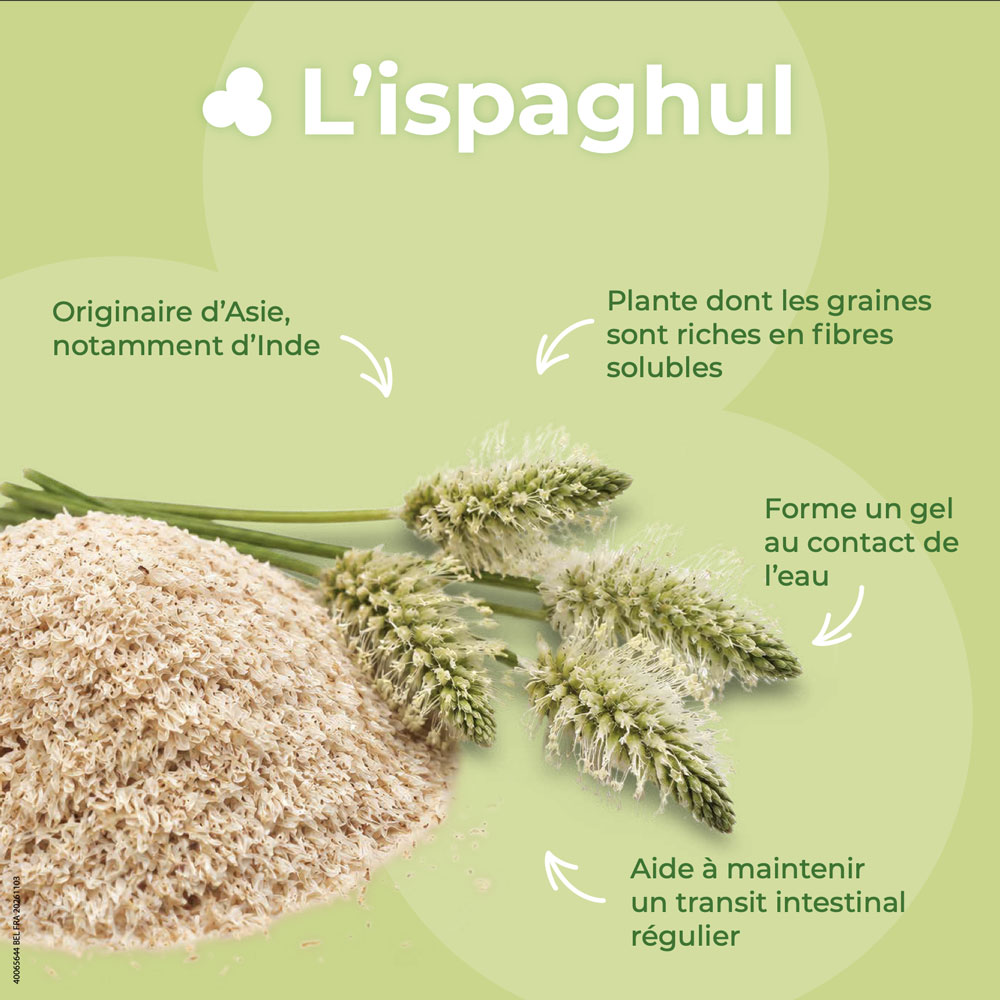
L’ispaghul (ou psyllium), plante annuelle, se compose d’une tige ramifiée et de feuilles linéaires, lancéolées, dentées et pubescentes. Ses fleurs sont blanches, groupées en épis cylindriques et ses graines sont ovales, carénées, grises ou beige clair avec une face convexe parcourue par une ligne brune.

Digestion
Téguments
Intestins
Floraison

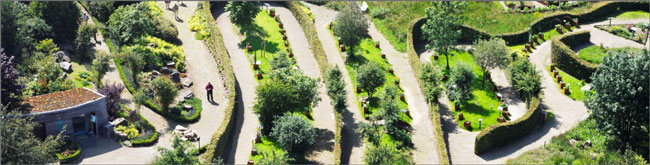
Retrouvez cette plante dans notre Jardin des plantes médicinales Herba Sana
Origine:

Inde - Iran

Partie utilisée:

Les téguments.

Composants actifs & propriétés:

Mucilages (polysaccharides): ont un effet laxatif de lest. Ces composants non-digestibles ont la capacité d'absorber l'eau. C’est ainsi qu’ils augmentent le volume fécal, ramollissent les selles et stimulent doucement le transit intestinal.

Usage:

L’ispaghul (ou psyllium) a été utilisé dans la médecine ayurvédique en Inde et en médecine traditionnelle chinoise depuis des milliers d'années comme laxatif doux .

On l’utilise aussi comme agent épaississant pour la crème glacée et les desserts congelés. L’ispaghul se lie à l'humidité, il aide ainsi à la préparation des pains sans gluten qui sont moins friables.

Il a également été utilisé pour traiter les irritations de la peau, les morsures, les piqûres d'insectes et aussi pour traiter la diarrhée, les hémorroïdes, les problèmes de vessie, de côlon irritable et de pression artérielle. L’ispaghul est même utilisé pour réduire le taux de cholestérol.

Des études scientifiques ont démontré que l’ispaghul contribuait à la fonction intestinale et au transit intestinal.1-9 Il aide aussi à maintenir l'intestin en bonne santé.10-18

  1. Laxative drug products for over-the-counter human use; psyllium ingredients in granular dosage forms. Final rule.
    Fed Regist. 2007 Mar 29;72(60):14669-74.
    Government Publishing Office: Official PDF
  2. Plantago ovata.
    Ceranić M, Kecmanović D, Pavlov M, Sepetkovski A, Kovacević P, Stamenković A, Masirević V, Ranković V.
    Acta Chir Iugosl. 2006;53(1):9-11.
    PubMed: PMID 16989139
  3. The gel-forming polysaccharide of psyllium husk (Plantago ovata Forsk).
    Fischer MH, Yu N, Gray GR, Ralph J, Anderson L, Marlett JA.
    Carbohydr Res. 2004 Aug 2;339(11):2009-17.
    PubMed: PMID 15261594
  4. Plantago ovata (Psyllium).
    Alternative Medicine Review.
    Altern Med Rev. 2002 Apr;7(2):155-9.
    PubMed: PMID 11991795
  5. Clinical response to dietary fiber treatment of chronic constipation.
    Voderholzer WA, Schatke W, Mühldorfer BE, Klauser AG, Birkner B, Müller-Lissner SA.
    Am J Gastroenterol. 1997 Jan;92(1):95-8.
    PubMed: PMID 8995945
  6. Digestibility and bulking effect of ispaghula husks in healthy humans.
    Marteau P, Flourié B, Cherbut C, Corrèze JL, Pellier P, Seylaz J, Rambaud JC.
    Gut. 1994 Dec;35(12):1747-52.
    PubMed Central: PMC1375264
  7. The effects of ispaghula on rat caecal fermentation and stool output.
    Edwards CA, Bowen J, Brydon WG, Eastwood MA.
    Br J Nutr. 1992 Sep;68(2):473-82.
    PubMed: PMID 1445826
  8. The efficacy of Plantago ovata as a regulator of intestinal transit. A double-blind study compared to placebo.
    Tomás-Ridocci M, Añón R, Mínguez M, Zaragoza A, Ballester J, Benages A.
    Rev Esp Enferm Dig. 1992 Jul;82(1):17-22.
    PubMed: PMID 1520545
  9. Plantago ovata seeds as dietary fibre supplement: physiological and metabolic effects in rats.
    Leng-Peschlow E.
    Br J Nutr. 1991 Sep;66(2):331-49.
    PubMed: PMID 1662073
  10. A review of the efficacy of traditional Iranian medicine for inflammatory bowel disease.
    Rahimi R, Shams-Ardekani MR, Abdollahi M.
    World J Gastroenterol. 2010 Sep 28;16(36):4504-14.
    PubMed Central: PMC2945480
  11. Plantago ovata consumption and colorectal mortality in Spain, 1995-2000.
    López JC, Villanueva R, Martínez-Hernández D, Albaladejo R, Regidor E, Calle ME.
    J Epidemiol. 2009;19(4):206-11.
    PubMed: PMID 19561384
  12. Evaluation of prebiotic potential of refined psyllium (Plantago ovata) fiber in healthy women.
    Elli M, Cattivelli D, Soldi S, Bonatti M, Morelli L.
    J Clin Gastroenterol. 2008 Sep;42 Suppl 3 Pt 2:S174-6.
    PubMed: PMID 18685505
  13. A diet supplemented with husks of Plantago ovata reduces the development of endothelial dysfunction, hypertension, and obesity by affecting adiponectin and TNF-alpha in obese Zucker rats.
    Galisteo M, Sánchez M, Vera R, González M, Anguera A, Duarte J, Zarzuelo A.
    J Nutr. 2005 Oct;135(10):2399-404.
    PubMed: PMID 16177203
  14. Intestinal anti-inflammatory activity of dietary fiber (Plantago ovata seeds) in HLA-B27 transgenic rats.
    Rodríguez-Cabezas ME, Gálvez J, Camuesco D, Lorente MD, Concha A, Martinez-Augustin O, Redondo L, Zarzuelo A.
    Clin Nutr. 2003 Oct;22(5):463-71.
    PubMed: PMID 14512034
  15. Dietary fiber down-regulates colonic tumor necrosis factor alpha and nitric oxide production in trinitrobenzenesulfonic acid-induced colitic rats.
    Rodríguez-Cabezas ME, Gálvez J, Lorente MD, Concha A, Camuesco D, Azzouz S, Osuna A, Redondo L, Zarzuelo A.
    J Nutr. 2002 Nov;132(11):3263-71.
    PubMed: PMID 12421838
  16. Mucopolysaccharides from psyllium involved in wound healing.
    Westerhof W, Das PK, Middelkoop E, Verschoor J, Storey L, Regnier C.
    Drugs Exp Clin Res. 2001;27(5-6):165-75.
    PubMed: PMID 11951574
  17. Randomized clinical trial of Plantago ovata seeds (dietary fiber) as compared with mesalamine in maintaining remission in ulcerative colitis.
    Fernández-Bañares F, Hinojosa J, Sánchez-Lombraña JL, Navarro E, Martínez-Salmerón JF, García-Pugés A, González-Huix F, Riera J, González-Lara V, Domínguez-Abascal F, Giné JJ, Moles J, Gomollón F, Gassull MA.
    Am J Gastroenterol. 1999 Feb;94(2):427-33.
    PubMed: PMID 10022641
  18. Effect of fiber supplements on internal bleeding hemorrhoids.
    Perez-Miranda M, Gomez-Cedenilla A, León-Colombo T, Pajares J, Mate-Jimenez J.
    Hepatogastroenterology. 1996 Nov-Dec;43(12):1504-7.
    PubMed: PMID 8975955
  19. Hypoglycemic and Hypolipidemic Potential of a High Fiber Diet in Healthy versus Diabetic Rabbits.
    Díez R, García JJ, Diez MJ, Sierra M, Sahagún AM, Calle AP, Fernández N.
    Biomed Res Int. 2013;2013:960568.
    PubMed Central: PMC3666357
  20. Soluble fibre (Plantago ovata husk) reduces plasma low-density lipoprotein (LDL) cholesterol, triglycerides, insulin, oxidised LDL and systolic blood pressure in hypercholesterolaemic patients: A randomised trial.
    Solà R, Bruckert E, Valls RM, Narejos S, Luque X, Castro-Cabezas M, Doménech G, Torres F, Heras M, Farrés X, Vaquer JV, Martínez JM, Almaraz MC, Anguera A.
    Atherosclerosis. 2010 Aug;211(2):630-7.
    PubMed: PMID 20413122
  21. Effect of two doses of a mixture of soluble fibres on body weight and metabolic variables in overweight or obese patients: a randomised trial.
    Salas-Salvadó J, Farrés X, Luque X, Narejos S, Borrell M, Basora J, Anguera A, Torres F, Bulló M, Balanza R; Fiber in Obesity-Study Group.
    Br J Nutr. 2008 Jun;99(6):1380-7.
    PubMed: PMID 18031592
  22. Plantago ovata husks-supplemented diet ameliorates metabolic alterations in obese Zucker rats through activation of AMP-activated protein kinase. Comparative study with other dietary fibers.
    Galisteo M, Morón R, Rivera L, Romero R, Anguera A, Zarzuelo A.
    Clin Nutr. 2010 Apr;29(2):261-7.
    PubMed: PMID 19735963
  23. Effects of soluble fiber (Plantago ovata husk) on plasma lipids, lipoproteins, and apolipoproteins in men with ischemic heart disease.
    Solà R, Godàs G, Ribalta J, Vallvé JC, Girona J, Anguera A, Ostos M, Recalde D, Salazar J, Caslake M, Martín-Luján F, Salas-Salvadó J, Masana L.
    Am J Clin Nutr. 2007 Apr;85(4):1157-63.
    PubMed: PMID 17413119
  24. The effect of a Plantago ovata seed containing preparation on appetite variables, nutrient and energy intake.
    Turnbull WH, Thomas HG.
    Int J Obes Relat Metab Disord. 1995 May;19(5):338-342.
    PubMed: PMID 7647826